
Choosing the right hair transplant doctor in NYC comes down to three things: verified credentials, a surgeon who personally performs the procedure rather than delegating it to technicians, and documented experience with your specific type of hair loss. Once you have found that doctor, preparation and aftercare determine how well your results turn out.
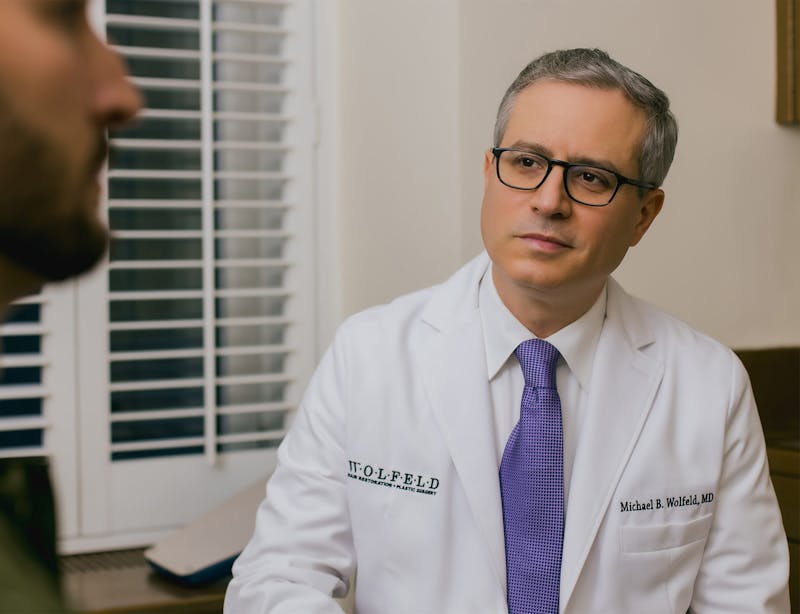
Dr. Michael Wolfeld, the first physician in the United States to be double board-certified by the American Board of Plastic Surgery and the American Board of Hair Restoration Surgery, draws on years of robotic FUE experience to walk patients through exactly what to look for, how to prepare, and how to care for a transplant once it is done.
Finding a qualified hair transplant doctor in NYC can feel overwhelming, given how many clinics advertise the procedure. Below, this guide breaks down the criteria that actually separate a skilled surgeon from a technician-run operation, followed by a step-by-step prep checklist and a two-week recovery timeline.
6 Criteria for Choosing the Best Hair Transplant Doctor in NYC
Not every hair transplant doctor in NYC has the same training, and the differences show up in your results. Use these six criteria to evaluate a clinic before booking a consultation:
- Board certification, and in what specialty. Confirm certification through the American Board of Plastic Surgery or the American Board of Hair Restoration Surgery, not a self-designated "board" with no recognized standards body behind it.
- ISHRS membership and training. Active membership in the International Society of Hair Restoration Surgery signals ongoing education in current techniques and honest outcome reporting.
- Who performs the critical steps. Ask directly whether the surgeon personally handles graft extraction and site creation, or whether technicians perform those steps with limited physician oversight.
- Experience with your specific hair loss type. A doctor experienced in male pattern baldness may have far less experience with eyebrow restoration, scarring alopecia, or transgender hair transplantation, so ask about volume in your particular case.
- Before-and-after portfolio quality. Look for consistent, natural-looking results across many patients rather than a handful of best-case photos.
- Transparency about pricing and realistic outcomes. A trustworthy hair transplant doctor in NYC discusses per-graft cost, expected density, and timeline honestly, without overpromising a full head of hair from a single session.
Why Dual Board Certification Matters in Hair Restoration
Dual board certification in plastic surgery and hair restoration matters because it combines two distinct skill sets that most surgeons only hold one of:
- Plastic surgery certification demonstrates aesthetic judgment, surgical safety protocols, and ethical patient care
- Hair restoration certification confirms specialized knowledge of techniques in grafting and hairline design
Dr. Wolfeld remains the first physician in the country to hold both certifications, a distinction reflected in his hairline design work and his selection by the manufacturer of the ARTAS iX system to demonstrate its robotic harvesting technique in an instructional video for physicians worldwide. Most hair transplant providers can point to one certification; few can point to both.
Red Flags to Watch for When Evaluating NYC Hair Transplant Clinics
Certain warning signs suggest a clinic prioritizes volume over patient outcomes. Watch for the following before committing to any hair transplant doctor in NYC:
- Technicians, not the surgeon, perform extraction and site-making with minimal physician involvement.
- No clear disclosure of the surgeon-to-patient ratio during a busy procedure day.
- Per-graft pricing that runs noticeably below the local market average.
- No in-person consultation offered before the day of surgery.
- No verifiable before-and-after gallery, or vague, unattributed results.
According to a peer-reviewed analysis of complications in hair transplantation published on PMC, serious complications occur in fewer than 1% of procedures, and most of those that do occur are avoidable with proper surgical technique. That statistic underscores why surgeon selection, not price, is the strongest lever a patient has over their own outcome.
How to Prepare for a Robotic Hair Transplant: A Step-by-Step Checklist
Proper preparation in the weeks before surgery directly affects graft survival and recovery time. Follow this checklist ahead of a robotic follicular unit extraction procedure:
- Stop blood-thinning medications as directed by your doctor. Blood thinners increase bleeding risk during extraction and site-making.
- Avoid alcohol for one week before the procedure. Alcohol can thin blood and interfere with healing.
- Stop smoking at least two weeks before surgery. Research on factors affecting follicular graft survival published on PMC found that smoking reduces blood flow and impairs follicle oxygenation, both of which lower graft survival rates.
- Wash your hair the morning of the procedure. A clean scalp reduces the risk of infection during the robotic extraction and implantation process.
- Arrange transportation home in advance. Patients should not drive themselves after the procedure.
- Plan what to wear. Button-down shirts avoid pulling fabric over a freshly treated scalp.
Dr. Wolfeld reviews this checklist with each patient during a personalized consultation, since medication timing and other prep steps can vary based on each patient's health history.
Post-Procedure Care Instructions: The First 2 Weeks After Your Hair Transplant
Recovery from a hair transplant follows a fairly predictable timeline, and knowing what to expect at each stage reduces unnecessary worry.
Androgenetic alopecia, the most common reason patients seek treatment, affects roughly 50% of men by age 50 and 80% by age 70, according to the NIH's Endotext resource on male androgenetic alopecia, which makes hair transplantation one of the more common elective procedures for men.
Days 1 to 3
Mild swelling around the forehead and eyes is common. Avoid touching or scratching the transplanted grafts, and sleep with your head elevated to minimize swelling.
Days 4 to 7
Gentle washing can typically begin using a technique your doctor demonstrates, and direct sun exposure to the scalp should still be avoided.
Week 2
Small scabs around the grafts begin to flake away naturally. Strenuous exercise should still wait, since increased blood pressure and sweating can dislodge healing grafts.
When to Contact Your Doctor After a Hair Transplant
Certain symptoms during recovery warrant a follow-up call rather than a wait-and-see approach. These include:
- Redness that spreads beyond the treated area
- Fever
- Unusual discharge from the scalp
- Pain that persists and worsens rather than improves
Most recoveries proceed without any of these signs, and a brief call to your doctor's office can quickly confirm whether what you are experiencing falls within the normal range.
We’re Here to Guide You Through Every Stage of Recovery
The right hair transplant doctor in NYC does more than perform a procedure. Dr. Wolfeld spent five years working alongside Dr. Robert Bernstein before building a practice focused exclusively on hair restoration, and that focus shows in how closely he manages every stage of care, from the initial diagnosis through the final weeks of healing. Patients are not handed a checklist and sent on their way; each step is walked through in person.
That level of involvement is exactly what separates a board-certified specialist from a volume-driven clinic. A personal consultation with Dr. Wolfeld starts with an honest assessment of your hair loss pattern, so any recommendation reflects your specific case rather than a generic protocol. Contact us today to schedule yours.
Disclaimer: This blog is provided for general informational purposes only and does not constitute medical advice. Every patient's hair loss pattern, health history, and candidacy for a hair transplant are different, and outcomes vary from person to person.