
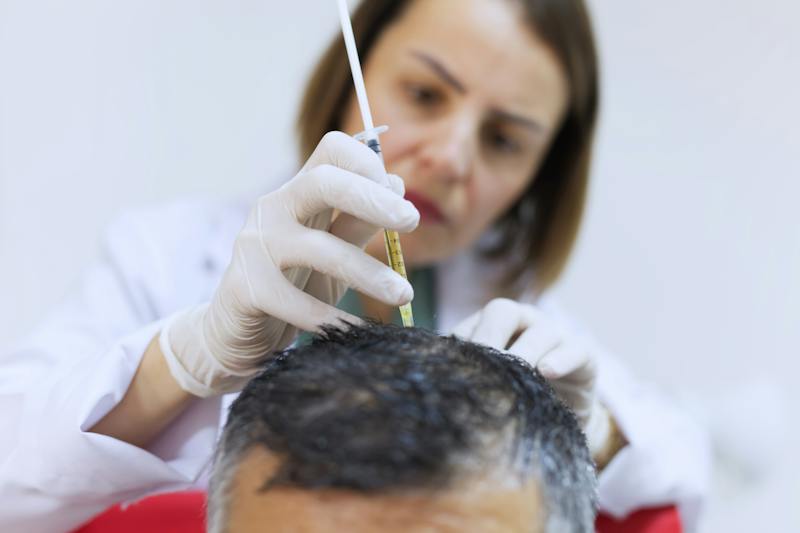
PRP for hair loss can be effective for treating receding hairlines, but results depend heavily on the stage of hair loss and whether active hair follicles remain in the treatment area. Platelet-rich plasma therapy works best for individuals experiencing early-stage hairline recession with thinning hair rather than complete baldness, as the treatment stimulates existing dormant follicles rather than creating new ones. For men noticing the first signs of a receding hairline, PRP represents a minimally invasive option that may help slow progression and promote regrowth when combined with a comprehensive treatment approach.
Understanding whether PRP is right for your specific situation requires examining the clinical evidence, candidacy criteria, and how this hair regrowth treatment compares to alternatives like medication or surgical restoration. This guide covers everything you need to know about PRP hair loss treatment in 2026, including what the latest research shows about its effectiveness for front hairline thinning.
What Is PRP and How Does It Work for Hair Loss?
PRP, or platelet-rich plasma, is a regenerative scalp treatment that uses concentrated growth factors from your own blood to stimulate hair follicle activity. The treatment falls under the regenerative medicine umbrella and has gained significant attention as a non-surgical approach to addressing thinning hair.
The process begins with a standard blood draw, similar to what you would experience during routine lab work. Your blood is then placed in a centrifuge, which spins at high speed to separate the plasma from red blood cells. This concentrated plasma contains a high density of platelets—the cells responsible for healing and tissue regeneration—along with growth factors that play a crucial role in hair follicle health.
When injected into the scalp, PRP may help promote increased blood flow to treatment sites and support blood vessel development. The growth factors work to stimulate dormant hair follicles, potentially reversing the miniaturization process that causes hair to become progressively thinner over time. According to clinical research, PRP can help trigger and maintain the growth phase of the hair cycle while increasing hair shaft thickness.
Dr. Wolfeld's expertise in hair restoration allows for precise application of PRP therapy, ensuring the treatment targets areas where it can have the greatest impact on follicle regeneration.
Who Is a Good Candidate for PRP Hair Treatment?
The ideal candidate for PRP hair treatment is someone experiencing early-to-moderate hair thinning who still has active hair follicles in the treatment area. PRP injection for hair loss works by stimulating existing follicles, which means it cannot restore hair in areas where follicles have been completely destroyed or have been dormant for extended periods.
Several factors determine whether PRP is appropriate for your situation. Understanding the underlying causes of your hair loss is essential, as PRP is most effective for androgenetic alopecia—the genetic pattern hair loss that affects millions of men and women.
Candidates who typically see the best results include:
-
Men with early-stage male pattern baldness showing hairline recession or crown thinning
-
Individuals who have noticed increased hair shedding or gradual thinning within the past few years
-
Those with miniaturizing hair follicles that are producing thinner, weaker strands
-
Patients seeking a non-surgical option to complement other treatments
PRP may be less effective for individuals with advanced baldness where the scalp appears smooth and shiny, indicating complete follicle loss. Similarly, those with hair loss caused by scarring conditions, autoimmune disorders, or certain medications may not be ideal candidates without addressing the underlying cause first.
A consultation with a hair loss specialist can help determine whether your follicles retain enough activity to respond to PRP therapy. This assessment typically involves examining the scalp, reviewing your hair loss history, and discussing realistic expectations based on your specific pattern of thinning.
Does PRP Work for Receding Hairlines? Clinical Evidence
PRP can work for receding hairlines when treatment begins early enough and active follicles remain in the frontal scalp region. Clinical studies have demonstrated that PRP may serve as a safe and effective treatment option against hair loss, though researchers note that more extensive controlled studies continue to build the evidence base.
The frontal hairline presents unique challenges compared to other areas of the scalp. Hair follicles in this region are often more sensitive to the hormonal factors that drive pattern hair loss, which means they may miniaturize and become dormant more quickly. However, this same sensitivity can work in favor of treatment when intervention occurs before significant follicle degradation.
Research published in peer-reviewed journals has shown measurable improvements in hair density following PRP treatment. Studies indicate that patients can experience increases in hair count per square centimeter, with some research documenting density improvements over the course of treatment. The key finding across multiple studies is that results are most pronounced in patients with recent-onset thinning rather than long-standing baldness.
For receding hairlines specifically, PRP appears most beneficial when:
-
The recession is in early stages with visible thinning rather than complete hair loss
-
Treatment is initiated within the first few years of noticing hairline changes
-
The patient commits to the recommended treatment protocol and maintenance schedule
-
PRP is combined with other evidence-based approaches to address hair loss causes
It typically takes a minimum of three months to see visible improvement in hair loss with PRP. Over time, patients can expect gradual improvements in hair density and thickness, though individual results vary based on factors including age, extent of hair loss, and overall health.
PRP vs. Hair Transplant: Comparing Your Options
PRP and hair transplant surgery serve different purposes and are often complementary rather than competing treatments. Understanding the distinctions helps you determine which approach—or combination of approaches—aligns with your goals and stage of hair loss.
PRP is a non-surgical treatment that works to preserve and strengthen existing hair follicles. It requires no incisions, has minimal downtime, and can be completed during a lunch break. The treatment is ideal for those looking to slow progression and improve hair quality in areas where thinning has begun but significant loss has not yet occurred.
Hair transplant surgery, by contrast, physically relocates healthy follicles from donor areas to regions of baldness. This surgical approach can restore hair in areas where follicles have been completely lost—something PRP cannot accomplish. Transplants provide permanent results in the transplanted area, as the relocated follicles retain their genetic resistance to the hormones that cause pattern baldness.
|
Factor |
PRP Treatment |
Hair Transplant |
|---|---|---|
|
Best for |
Early thinning, preservation |
Advanced loss, restoration |
|
Procedure type |
Non-surgical injections |
Surgical follicle relocation |
|
Downtime |
Minimal (same day return to activities) |
Several days to weeks |
|
Results timeline |
3-6 months for visible improvement |
9-12 months for full growth |
|
Maintenance |
Ongoing sessions recommended |
Generally permanent |
|
Creates new hair |
No (stimulates existing follicles) |
Yes (relocates follicles) |
Many patients benefit from combining both approaches. PRP can help optimize the scalp environment before a transplant, support healing afterward, and protect non-transplanted native hair from continued thinning. For those not ready for surgery or whose hair loss does not yet warrant it, PRP offers a way to take action while monitoring progression.
What to Expect During PRP Treatment
A PRP treatment session is straightforward and typically completed within 60 to 90 minutes from start to finish. Understanding the process helps you prepare and know what to anticipate at each stage.
The appointment begins with a blood draw, usually from your arm, collecting approximately 30 to 60 milliliters depending on the protocol used. This blood is then processed in a centrifuge for 10 to 15 minutes to separate and concentrate the platelet-rich plasma.
While your blood is being processed, the treatment area is prepared. Some practitioners apply a topical numbing agent to minimize discomfort during the injection phase. The scalp is cleaned and mapped to ensure comprehensive coverage of thinning areas.
The injection phase involves delivering the concentrated PRP directly into the scalp using a fine needle. Injections are placed at regular intervals across the treatment zone, typically focusing on areas of visible thinning or recession. Most patients describe the sensation as mild pressure or brief pinching, with any discomfort resolving quickly after the procedure.
Following treatment, you can typically return to normal activities immediately. Some patients experience mild soreness, redness, or swelling at injection sites, which usually resolves within a day or two. Strenuous exercise and certain hair products may be restricted for 24 to 48 hours.
The standard protocol involves an initial series of three treatments spaced approximately one month apart. After completing this initial phase, maintenance sessions are typically recommended every three to six months to sustain results. Consistency with the treatment schedule is important, as the benefits of PRP are cumulative and require ongoing support to maintain.
Combining PRP with Other Hair Loss Treatments
PRP often delivers the best results when integrated into a comprehensive approach that addresses hair loss from multiple angles. Combining treatments can create synergistic effects that exceed what any single therapy achieves alone.
Minoxidil, the topical hair loss medication available over the counter, works through a different mechanism than PRP. While PRP delivers growth factors directly to follicles, minoxidil improves blood flow to the scalp and extends the growth phase of the hair cycle. Using both treatments together addresses hair loss through complementary pathways.
Finasteride, the oral prescription medication for male pattern hair loss, blocks the hormone DHT that causes follicle miniaturization. For men experiencing hairline recession driven by androgenetic alopecia, combining finasteride with PRP can help stop the underlying cause while simultaneously stimulating follicle activity.
Low-level laser therapy (LLLT) represents another option that pairs well with PRP. This new hair loss treatment uses specific wavelengths of light to stimulate cellular activity in hair follicles. When used alongside PRP, LLLT may enhance the scalp environment and support the regenerative effects of platelet-rich plasma.
Microneedling has emerged as a particularly effective complement to PRP. The controlled micro-injuries created during microneedling trigger a healing response and may improve the absorption and effectiveness of PRP when treatments are combined. Some protocols apply PRP immediately following microneedling to maximize penetration.
Exploring the full range of medical treatments available allows you to develop a personalized protocol that addresses your specific pattern of loss, lifestyle considerations, and treatment goals. A hair loss specialist can help determine which combination offers the best potential for your situation.
Schedule Your PRP Consultation with Dr. Wolfeld
Determining whether PRP is right for your receding hairline requires a personalized evaluation of your hair loss pattern, follicle health, and treatment goals. A consultation provides the opportunity to examine your scalp, discuss your history, and develop a customized plan based on clinical assessment rather than guesswork.
During your consultation, you can expect a thorough examination of your hairline and overall scalp condition. This assessment helps identify whether your follicles retain the activity necessary to respond to PRP therapy and whether additional treatments might enhance your results.
You will also receive honest guidance about realistic expectations. Not every patient is an ideal candidate for PRP, and understanding what the treatment can and cannot accomplish helps you make an informed decision about how to stop hair loss progression.
For those who are good candidates, the consultation includes discussion of treatment protocols, scheduling considerations, and how PRP fits into a broader hair restoration strategy. Whether PRP serves as a standalone treatment or part of a combination approach, having a clear plan allows you to move forward with confidence.
Contact the office to schedule your consultation and take the first step toward addressing your receding hairline with evidence-based treatment options.
Frequently Asked Questions
Does PRP actually work for hair loss?
PRP can be effective for hair loss, particularly for individuals with early-to-moderate thinning who still have active hair follicles. Clinical research has demonstrated that PRP may serve as a safe and effective treatment option, with studies showing measurable improvements in hair density and thickness. Results vary based on the stage of hair loss, with the best outcomes seen in patients who begin treatment before significant follicle degradation occurs.
What is PRP hair loss treatment and how does it work?
PRP hair loss treatment involves drawing your blood, processing it to concentrate the platelets and growth factors, and injecting this platelet-rich plasma into the scalp. The growth factors stimulate dormant hair follicles, promote blood vessel development, and help trigger the hair growth phase. The treatment uses your body's own regenerative capabilities to improve follicle health and hair quality.
Can PRP treat a receding hairline specifically?
PRP can treat a receding hairline when active follicles remain in the frontal scalp region and treatment begins early in the hair loss process. The therapy stimulates existing follicles rather than creating new ones, so it works best for hairlines showing thinning rather than complete baldness. Early intervention offers the best opportunity for meaningful improvement in hairline density.
How many PRP sessions are needed to see hair regrowth results?
Most protocols recommend an initial series of three PRP sessions spaced approximately one month apart, followed by maintenance treatments every three to six months. Visible improvement typically takes a minimum of three months to appear, with continued enhancement over subsequent months. Consistency with the treatment schedule is essential for achieving and maintaining results.
What are the side effects and risks of PRP injections for hair loss?
PRP injections carry minimal risk since the treatment uses your own blood, eliminating concerns about allergic reactions or rejection. Common side effects include temporary soreness, redness, or swelling at injection sites, which typically resolve within one to two days. Serious complications are rare, making PRP one of the safer options among hair regrowth treatments.
How does PRP for hair loss compare to a hair transplant or medication?
PRP is a non-surgical treatment that stimulates existing follicles, while hair transplant surgery physically relocates follicles to restore hair in bald areas. Hair loss medication like finasteride addresses the hormonal cause of pattern baldness. These treatments serve different purposes and are often most effective when combined based on individual needs and stage of hair loss.
How much does PRP hair loss treatment cost, and is it covered by insurance?
PRP treatment costs vary based on geographic location, provider expertise, and the specific protocol used. Because PRP for hair loss is considered a cosmetic procedure, it is typically not covered by health insurance. Many practices offer payment plans or package pricing for the initial treatment series and maintenance sessions. A consultation can provide specific pricing information based on your treatment plan.