
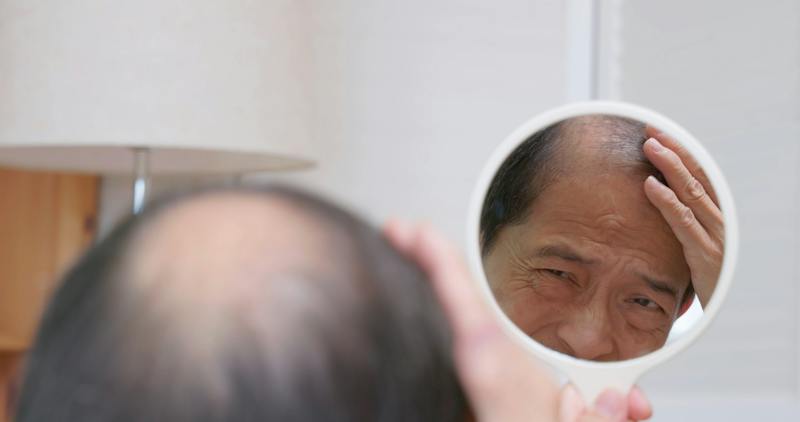
Overharvesting in a hair transplant means removing too many follicular units from the donor area, which is usually the back and sides of the scalp. Taking too many grafts can leave the donor area looking thin or patchy, and it leaves fewer grafts for future sessions. Overharvesting can be prevented. Published guidelines suggest extraction limits based on each patient's donor density, and careful planning keeps the donor area looking natural. No single graft number is safe for everyone, so the right plan depends on your hair and your goals.
A qualified hair restoration surgeon can measure your donor area and explain how many grafts it can support. At Dr. Michael Wolfeld's practice on Park Avenue in New York City, donor planning is part of every robotic FUE hair transplant in NYC. Imaging and mapping help guide which follicular units are extracted.
What does overharvesting mean in a hair transplant?
Overharvesting in a hair transplant means removing too many follicular units from the donor area, the back and sides of the scalp where hair is taken for transplanting. When too many grafts come from one area, the donor area can look thin, patchy, or uneven, and fewer grafts remain for future sessions.
A follicular unit is a natural group of one to four hairs. In follicular unit extraction (FUE), each unit is removed individually and placed where hair is thinning. FUE leaves no linear scar, and patients can wear their hair short. Because FUE is done one graft at a time, the number of grafts removed and how they are spread out both matter.
Why is the donor area limited?
The donor area is limited because it is a finite supply of hair that does not regenerate. Each follicular unit that is extracted moves to a new spot and is not replaced. Every graft used today is one fewer graft available later, which is why careful donor planning matters from the very first session.
A 2026 review in Cosmetics describes the donor area as a limited, non-regenerating source. The same review notes that how densely and how evenly grafts are extracted both affect whether thinning becomes visible. Hair restoration is popular. The ISHRS 2022 Practice Census reported more than 703,000 hair restoration procedures worldwide in 2021 and more than 2.2 million patients treated. That makes thoughtful donor management a key part of good care.
What are the signs of an overharvested donor area?
The main sign of an overharvested donor area is visible thinning on the back or sides of the scalp, especially with shorter hairstyles. You may notice a see-through, patchy, or uneven look where too many follicular units were removed. The donor area may also look less dense than the hair around it.
How noticeable the thinning looks depends on more than the number of hairs removed. A 2026 study in the Journal of Cosmetic Dermatology found that hair shaft diameter, length, and exit angle all affect how visible donor thinning appears. This is one reason experienced surgeons look at your whole hair profile, not just a graft count.
How much donor hair can be safely extracted?
No single number of grafts is safe for everyone, but published guidelines give useful limits. Studies suggest keeping first-session FUE extraction under about 35% of donor density and leaving roughly 40 follicular units per square centimeter or more behind. The right number for you depends on your donor size, density, and hair type.
Follicular units per square centimeter (FU/cm²) describes how many hair groupings grow in one small patch of scalp. Surgeons use this measurement to plan safe extraction.
|
Guideline |
Figure |
Source |
|
First-session FUE extraction |
Under 35% of total hair density |
Effect of Follicular Unit Extraction on the Donor Area (PMC) |
|
Second-session FUE extraction |
10–20% of total hair density |
Effect of Follicular Unit Extraction on the Donor Area (PMC) |
|
Point where the donor area may look noticeably thin |
More than 50% of original terminal hair harvested over one or more sessions |
|
|
Ideal residual density |
Above about 40 FU/cm² |
|
|
Residual density for adequate coverage (medium-caliber, straight or mildly wavy hair, moderate hair/skin contrast) |
40–50 FU/cm² |
Keene, Rassman & Harris, Hair Transplant Forum International, 2018 |
The 35% guideline comes from a 10-patient study that measured extraction at about 35.44% of donor density. Hair type also matters. Keene, Rassman and Harris note that fine, dark hair on a light scalp carries more risk. These figures are guidelines, not fixed rules.
How do surgeons prevent overharvesting?
Surgeons prevent overharvesting by measuring the donor area before surgery, spreading extractions evenly, and planning for future sessions. A careful surgeon doesn't aim for the largest possible graft count in one day. Instead, the surgeon calculates how many follicular units the donor area can give while leaving enough density to look natural.
Measuring density before surgery
Donor capacity depends on four measurements: the size of the donor area in square centimeters, the baseline density of follicular units, the maximum extraction density, and the density that should remain afterward. Measuring these before surgery turns donor planning from guesswork into a clear plan.
Spreading extractions evenly
Spreading extractions across the full donor area helps avoid concentrated thin spots. How evenly grafts are distributed affects how visible thinning becomes, so placement matters as much as the total number.
Planning for future sessions
Many patients choose more than one session as their hair loss changes over time. Published guidance allows a smaller 10–20% extraction in a second session, so saving donor hair early keeps your future options open. Some patients may also discuss follicular unit transplantation (FUT), a strip-harvesting method, as part of a long-term plan.
How does robotic FUE help protect the donor area?
Robotic FUE helps protect the donor area by using imaging and mapping to choose which follicular units to extract and to check the angle of each hair. At Dr. Wolfeld's practice, the robotic system extracts grafts in a random pattern with gentle punches. This helps spread removal across the donor area rather than concentrating it in one spot.
Dr. Wolfeld uses the ARTAS iX System for robotic hair transplantation. According to the practice, the robot can make as many as 1,000 grafts in an hour, with no scalpels or sutures. The procedure is minimally invasive, and most patients return to their usual activities within a day or two.
Results take time. Patients usually see new hair in about three months and noticeable improvement within six months. Full results take about one year. Robotic precision works best alongside careful planning by an experienced surgeon, because technology supports good judgment but does not replace it.
Who is a good candidate for robotic FUE?
A good candidate for robotic FUE is a man or woman with thinning hair who has enough healthy donor hair to meet their goals and realistic expectations about results. The best way to confirm candidacy is a consultation, where a hair restoration surgeon checks your donor density, hair characteristics, and long-term plans.
Dr. Michael Wolfeld is described by his practice as the first hair transplant specialist in the country board certified in both plastic surgery and hair restoration. His practice focuses only on hair restoration. During a consultation, he can review your donor area and explain how many grafts it can support now and in the future.
FAQs
Does donor hair grow back after it is extracted?
No, donor hair does not grow back once a follicular unit is extracted. The follicle moves to the area being treated and keeps growing there. Because the donor area is a limited, non-regenerating source, surgeons plan extractions carefully so that enough hair remains in the donor area to look full and natural.
Can an overharvested donor area be improved?
An overharvested donor area may be improved in some cases, depending on how much donor hair remains and the patient's hair characteristics. The options differ from person to person, so the first step is an evaluation by a qualified hair restoration surgeon. That surgeon can assess current donor density and explain which approaches might be realistic.
Is overharvesting more common with FUE or FUT?
Overharvesting is most often discussed with FUE because grafts are removed one at a time across the donor area, so extraction density and spacing need careful control. FUT removes a single strip of tissue instead. Either method requires donor planning. With FUE, measured limits and even distribution help keep the donor area looking natural.
How many hair transplant sessions can my donor area support?
The number of sessions your donor area can support depends on its size, baseline density, and your hair type. Published guidance suggests a first FUE session under 35% of donor density and a second session of 10–20%. A consultation can estimate your personal donor budget across future sessions.
Does hair type affect how much donor hair can be used?
Yes, hair type affects how much donor hair can be used safely. Hair shaft diameter, length, and exit angle all change how visible thinning looks. Medium-caliber hair with moderate hair/skin contrast hides extraction well, while fine, dark hair on a light scalp carries more risk of visible thinning.
What questions should I ask my surgeon about donor planning?
Ask your surgeon how they measure your donor density, how many grafts your donor area can safely provide, and how much density will remain afterward. Also ask how extractions will be spread out and how the plan accounts for future sessions. Clear answers to these questions show that your donor hair is being protected.
Protect Your Donor Hair With a Plan
Overharvesting can be prevented when your transplant starts with measured donor planning and even extraction. A qualified hair restoration surgeon can tell you how many grafts your donor area can safely support. To learn whether a robotic FUE hair transplant in NYC fits your goals, schedule a consultation with Dr. Wolfeld at 630 Park Avenue in New York, or book a virtual consultation if you're traveling from outside the city.